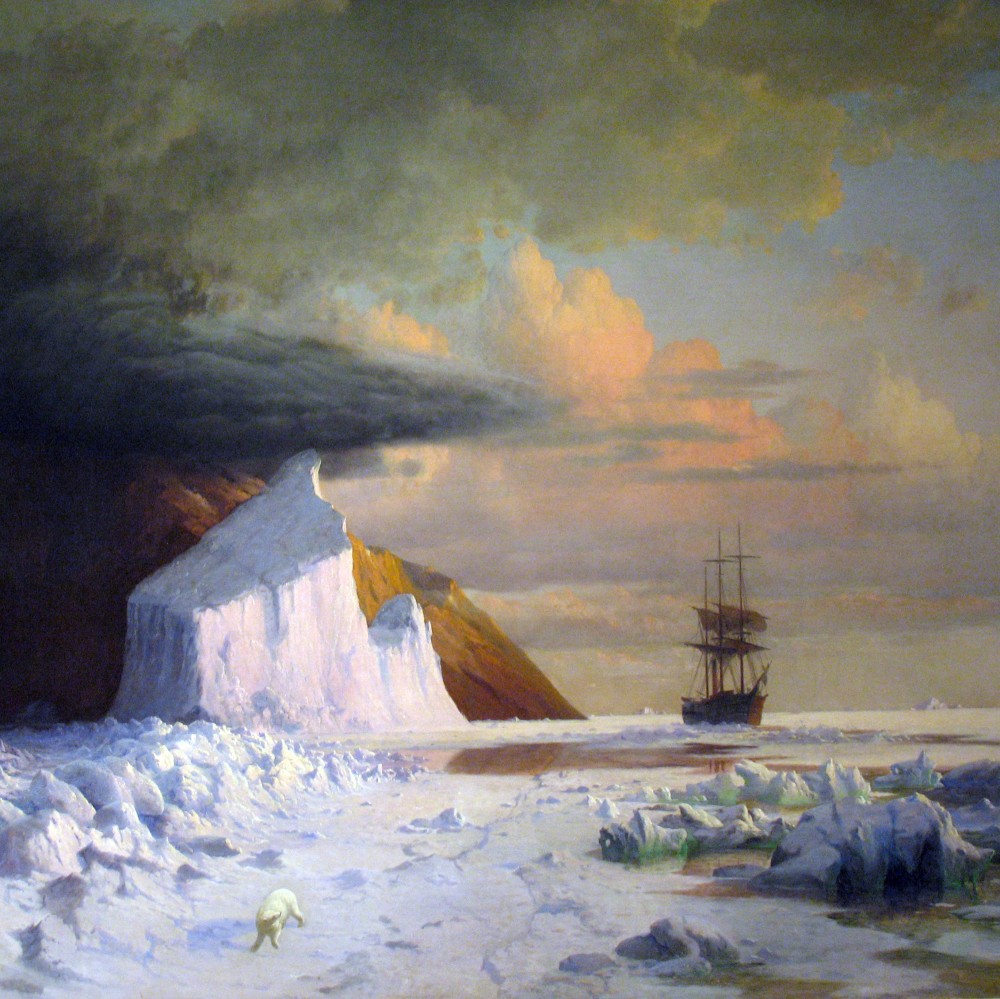
This image shows an hand-made chinese vase.
Extraordinary Grunge Painting by Russ Mills<br>Name of photo's author: Russ Mills<br>This photo was taken in: art
mpl_001.jpg
Sala São Paulo, em São Paulo, Brasil
Sala São Paulo inside Júlio Prestes Station, Brazil
solardosca_mara.jpg
solar_dos_ca_mara_08.jpg
This applies to the United States, Australia, the European Union and those countries with a copyright term of life of the author plus 70 years.
solar_dos_ca_mara_02.jpg
Santander Cultural, Porto Alegre, Rio Grande do Sul, Brasil
In some countries this may not be legally possible; if so:
Airtonjordani grants anyone the right to use this work for any purpose, without any conditions, unless such conditions are required by law.
Detalhe do Museu Santander Cultural, em Porto Alegre (RS, Brasil). Detail of the Santander Cultural Museum, in Porto Alegre (Brazil).
ra_dio_da_ufrgs_-_detalhe.jpg
radioufrgs.jpg
radio-da-ufrgs.jpg
caria_tide2_-_antiga_alfa_ndega.jpg
atlas_na_antiga_alfa_ndega_de_porto_alegre.jpg
atlas_-_antiga_alfa_ndega.jpg
antiga_alfa_ndega.jpg
prefeitura_velha_de_porto_alegre.jpg
Prefeitura de Porto Alegre/RS - Brasil
Paço Municipal de Porto Alegre, Brasil.
prefeitura_fachada_traseira.jpg
Praça Montevidéu e Paço Municipal, Porto ALegre, Brasil.
paa_o_municipal_08.jpg
centrodeportoalegre.jpg
centro_de_porto_alegre_-_prefeitura_velha.jpg
pala_ciodominista_rio-pa_blico.jpg
minista_rio_pa_blico.jpg
Pedro Weingärtner: Daphnis e Chloe, sem data, acervo do Museu de Arte do Rio Grande do Sul Ado Malagoli.
Atelier Julian
The small lake in the plain and a flock of sheeps
Museu de Arte do Rio Grande do Sul, Porto Alegre, Brasil
Museu de Arte do Rio Grande do Sul Ado Malagoli, visto da rua Siqueira Campos Porto Alegre, Brazil
margs_interior6.jpg
margs_detalhe_do_terraa_o.jpg
Head of an old woman
fachada-margs---esculturas-.jpg
Museu de Arte do Rio Grande do Sul, Porto Alegre, Brasil
Guilherme Litran: Cristo crucificado, cópia de Velázquez, fins do século XIX, acervo do Museu de Arte do Rio Grande do Sul Ado Malagoli.
Museu de Arte do Rio Grande do Sul, Porto Alegre, Brasil. Detalhe da ornamentação no terraço.
Carlos Alberto Petrucci: Retrato de José Lewgoy, óleo sobre tela, 1947, acervo do Museu Museu de Arte do Rio Grande do Sul Ado Malagoli, Porto Alegre, Brasil.
Milton Kurtz: Quasi contacto, acrílico sobre tela, 1989, acervo do Museu Museu de Arte do Rio Grande do Sul Ado Malagoli, Porto Alegre, Brasil.
01389---ma_rio-ra_hnelt---sem.jpg
Tempora mutantur, 1898, oil on canvas by Pedro Weingärtner (Porto Alegre/RS, 26.7.1853 - 26.12.1929). Museu de Arte do Rio Grande do Sul Ado Malagoli (MARGS), Porto Alegre, Brazil.
Edgar Koetz: Catedral de Buenos Aires, óleo sobre tela, 1950, acervo do Museu Museu de Arte do Rio Grande do Sul Ado Malagoli, Porto Alegre, Brasil.
Helosísa Crocco: Eco II, escultura em madeira e fibras naturais. 1978, acervo do MARGS.
00498_britto_velho_pintura2.jpg
Carlos Scliar: Natureza morta (Tríptico), têmpera encerada sobre tela, 1960, acervo do Museu Museu de Arte do Rio Grande do Sul Ado Malagoli, Porto Alegre, Brasil.
Glênio Bianchetti: Lázaro, têmpera sobre madeira, 1959, acervo do Museu Museu de Arte do Rio Grande do Sul Ado Malagoli, Porto Alegre, Brasil.
This applies to the United States, Australia, the European Union and those countries with a copyright term of life of the author plus 70 years.
00071-gla_nio-bianchetti---j.jpg
A creche (The nursery) (1899), oil on canvas by Henry-Jules-Jean GEOFFROY (Marennes/France, 1853 - (1899 or 1924?). Museu de Arte do Rio Grande do Sul Ado Malagoli, Porto Alegre, Brazil.
Geraldo trindade Leal: Ginete, óleo sobre tela, 1955, acervo do Museu Museu de Arte do Rio Grande do Sul Ado Malagoli, Porto Alegre, Brasil.
Ado Malagoli: O gato preto, óleo sobre tela, 1954, acervo do Museu Museu de Arte do Rio Grande do Sul Ado Malagoli, Porto Alegre, Brasil.
vista_parcial_do_mercado_pa_blico_de_porto_alegre.jpg
mercado_externo_norte.jpg
mercado_-_interior2.jpg
mercado_-_interior.jpg
banca_40.jpg
This applies to the United States, Australia, the European Union and those countries with a copyright term of life of the author plus 70 years.
memorial-do-rio-grande22.jpg
memorial-do-rio-grande.jpg
memorial_do_rio_grande2.jpg
Memorial do Rio Grande do Sul, Porto Alegre, Brasil
folberger-atlas.jpg
livraria-do-globo-portoaleg.jpg
globo.jpg
a01.jpg
pa_o_dos_pobres3.jpg
pa_o_dos_pobres.jpg
igreja_sa_o_josa_8b.jpg
igreja_sa_o_josa_6.jpg
igreja_sa_o_josa_5.jpg
igreja_sa_o_josa_40.jpg
igreja_sa_o_josa_35.jpg
igreja_sa_o_josa_2.jpg
igreja_sa_o_josa_19.jpg
igreja_sa_o_josa_14.jpg
igreja_sa_o_josa_111.jpg
igreja_sa_o_josa_.jpg
andra__arjonas.jpg
engenharia-ufrgs.jpg
Tuyuti Building, historical building in Porto Alegre, Brazil
edifa_cio_tuyuti_2.jpg
Fachada do Edifício Hudson, sede do jornal Correio do Povo, localizado na Rua Caldas Júnior, Centro de Porto Alegre.
correiodopovo.jpg
edifa_cio_ely_detalhe2.jpg
edifa_cio_ely_detalhe.jpg
edifa_cio_ely_02.jpg
edifa_cio_ely_-_porto_alegre.jpg
confeitaria_rocco6.jpg
confeitaria_rocco13.jpg
confeitaria_rocco11b.jpg
confeitaria_rocco.jpg
majestic8.jpg
majestic3.jpg
casadeculturamarioquintana5.jpg
Alameda dos Cataventos, uma ruela que interliga, atravessando a Casa de Cultura, a avenida dos Andradas e a rua Siqueira Campos
casa_parreira_machado2.jpg
casa_parreira_machado.jpg
biblioteca-pa_blica-rs.jpg
biblioteca_pa_blica_de_porto_alegre.jpg
palacete_eberle2.jpg
palacete_eberle1.jpg
The Gothic revival style church of San Camillo in Milan, Italy, was built in 1902 by engineer/priest Spirito Maria Chiappetta. Piazza San Camillo De Lellis, 1.
Portal of the Gothic-revival style church of San Camillo in Milan, Italy. It was built in 1902 by engineer/priest Spirito Maria Chiappetta. Picture by Giovanni Dall'Orto, October 18 2007.
Detail from the facade of the Gothic-revival style church of San Camillo in Milan, Italy. It was built in 1902 by engineer/priest Spirito Maria Chiappetta. Picture by Giovanni Dall'Orto, October 18 2007.
The Gothic revival style church of San Camillo in Milan, Italy, was built in 1902 by engineer/priest Spirito Maria Chiappetta. Picture by Giovanni Dall'Orto, October 18 2007.
The church of San Camillo in Milan, Italy. It was built in 1902 by engineer/priest Spirito Maria Chiappetta. This image was moved from Image:Milano, chiesa di san cristoforo 03.JPG. move approved by: User:ChristianBier
The church of San Camillo in Milan, Italy. It was built in 1902 by engineer/priest Spirito Maria Chiappetta.
The peculiar stained glass dome within the church of San Camillo in Milan, Italy. It was built in 1902 by engineer/priest Spirito Maria Chiappetta. Picture by Giovanni Dall'Orto, October 18 2007.
Plaque for the consecration of the new main altar made by cardinal Idelfonso Schuster (1937), inside the Gothic-revival style church of San Camillo in Milan, Italy. It was built in 1902 by engineer/priest Spirito Maria Chiappetta. Picture by Giovanni Dall'Orto, October 18 2007.
Inside view from the Gothic-revival style church of San Camillo in Milan, Italy. It was built in 1902 by engineer/priest Spirito Maria Chiappetta. Picture by Giovanni Dall'Orto, October 18 2007.
Novara, Italy, San Gaudenzio
gferrari_polyptych_novara.jpg
basilica_san_gaudenzio2.jpg
basilica_san_gaudenzio_urna.jpg
Immagine da Novara, Piemonte, Italia
Gilt bronze statue of Vittorio Emanuele II by Enrico Chiaradia (1851-1892) on the Vittoriano.
Rings on the Scroll of the Law on display at the Jewish museum in Rome.
Ornamental velvet covering of the Scroll of the Law on display at the Jewish museum in Rome.
Inner ornamental embroidered covering of the Scroll of the Law on display at the Jewish museum in Rome.
Silverware on display at the Jewish museum in Rome.
The Jewish museum in Rome, total.
see filename
see filename
see filename
see filename
see filename
see filename
see filename
see filename
see filename
see filename
see filename
see filename
see filename
see filename
see filename
Detail of a Fresco of an illusionary Garden, originally in the Triclinium of the Villa di Livia, now in the Museo Nazionale Romano, Rome, Italy
Rom, Villa der Livia in Primaporta, Gartenraum
Fresco of Livia Villa. First door. 30-20 a.C.n. National Roman Museum. Massimo Palace.
Statue of a prince or dynast without crown, traditionally thought to be a Seleucid prince, maybe Attalus II of Pergamon. Bronze, Greek artwork of the Hellenistic era, 3rd-2nd centuries BC.
Statue of a prince or dynast without crown, traditionnally thought to be a Seleucid prince, maybe Attalus II of Pergamon. Bronze, Greek artwork of the Hellenistic era, 3rd-2nd centuries BC./ Plaster cast in Pushkin museum after original in Palazzo Massimo alle Terme
Carlo Brogi (1850-1925) -
Portrait of Herodotus, identified after other known inscribed portraits of the historian. Greek marble, Roman copy of a Greek original of the early 4th century BC. From the area of Porta Metronia, Rome.
Portrait of a young girl as Artemis. Marble, Roman artwork of the late Neronian period or of the Flavian period. From the Terme dei Cisiarii in Ostia Antica.
Funerary relief with a sella curulis. Marble, Roman artwork, 50 BC–50 AD. From the Torre Gaia on the Via Casilina, Rome.
Funerary relief representing a curule chair. Marble, Roman artwork, 50 BC–50 CE. From the Torre Gaia at Via Casilina (Rome).
Priest of Isis with his bald head. Parian marble, Roman artwork of the late Republican perdiode, middle of the 1st century BC. From the Tiber (Rome).
Portrait of a young boy. Marble, Roman artwork of the early Imperial era, first half of the 1st century CE. From Morlupo, Italy.
Portrait of a young boy. Marble, Roman artwork of the early Imperial era, ca. 1-37 CE. From Grotta Celoni, on the via Casilina (Rome).
Male portrait, so-called “Brutus”. Marble, Roman artwork, 30–15 BC. From the Tiber, Rome.
Poppaea Sabina
Pavement mosaic with a duck. Roman artwork, 3rd century CE. From the area of the Monte della Giustizia in Piazza della Stazione Termini, in Rome.
Central panel of a floor mosaic with a cat and two ducks. Opus vermiculatum, Roman artwork of the late Republican era, first quarter of the 1st century BC.
Male portrait. Marble, Roman artwork of the Republican era, 3rd–2nd centuries BC. From the area of the Ministry of Finance in the Via del XX Settembre (Rome).
Male portrait. Pentelic marble, Roman artwork of the late Republican era, middle of the 1st century BC.
Flavia Iulia, daughter of the roman emperor Titus
Central panel of a floor mosaic with Hylas and the nymphs. Roman mosaic, dated between the late 2nd century BC and the beginning of the Imperial era. From Tor Bella Monaca, Rome.
Wedding scene: a matron leads the bride to the house of the groom. Pentelic marble, fragment from the frieze of the Basilica Aemilia, 1st century BC–1st century AD.
One version of the story of Tarpeia: Tarpeia is murdered by Sabine soldiers after having refused to betray Rome. Pentelic marble, fragment from the frieze of the Basilica Aemilia, 1st century BC–1st century AD.
Three male figures building the fortification wall of a city; a female figure on the left, probably a personification of the city, is watching. Pentelic marble, fragment from the frieze of the Basilica Aemilia, 1st century BC–1st century AD.
Duel, perhaps the combat between Horatii and Curiatii, more probably the combat between Romulus and Remus, described by some ancient authors as having taken place near the Ficus Ruminalis. Pentelic marble, fragment from the frieze of the Basilica Aemilia, 1st century BC–1st century AD.
Fresco with seated Venus, restored as a personification of Rome, so-called ”Dea Barberini” (“Barberini goddess”). Roman artwork, first half of the 4th century CE. From a room near the Baptistery of San Giovanni in Laterano, excavated in the 15th century.
Claudia Ottavia
Portrait of Germanicus. Marble, Roman artwork of the Imperial era, 1st half of the 1st century CE. From Mentana.
Antonia minor
Representation of the lupercal: Romulus and Remus fed by a she-wolf, surrounded by representations of the Tiber and the Palatine. Panel from an alter dedicated to the divine couple of Mars and Venus. Marble, Roman artwork of the end of the reign of Trajan (98-117 CE), later re-used under the Hadrianic era (117-132 CE) as a base for a statue of Silvan. From the portico of the Piazzale dei Corporazioni in Ostia Antica.
Erotes playing with the weapons and chariot of Mars, panel from an altar dedicated to Mars and Venus. Marble, Roman artwork of the end of the reign of Trajan (98-117 CE), later re-used under the Hadrianic era (117-132 CE) as a base for a statue of Silvan. From the portico of the Piazzale dei Corporazioni in Ostia Antica.
Inscription on the front panel from an altar dedicated to the divine couple of Mars and Venus:
Representation of the lupercal: Romulus and Remus fed by a she-wolf, surrounded by representations of the Tiber and the Palatine. Panel from an alter dedicated to the divine couple of Mars and Venus. Marble, Roman artwork of the end of the reign of Trajan (98-117 CE), later re-used under the Hadrianic era (117-132 CE) as a base for a statue of Silvan. From the portico of the Piazzale dei Corporazioni in Ostia Antica.
Colossal portrait of Emperor Alexander Severus. Marble, Roman artwork, 222–235 CE. From the Round Temple (?) in Ostia Antica.
Portrait of Agrippina Minor. Luni marble, Roman artwork of the late Claudian period. From Ostia Antica.
Actor playing a slave and wearing a comic mask. Bronze statuette, early 3rd century CE. From the Piazza Madonna dei Monti, 1973.
Portrait of Antinous with crown, a representation inspired from the Hellenistic period. Marble, late Hadrian period (130–138 CE).
Portrait of Antinous with crown, a representation inspired from the Hellenistic period. Marble, late Hadrian period (130–138 CE). From the sanctuary of the Magna Mater at Ostia
Portrait of Antinous with crown, a representation inspired from the Hellenistic period. Marble, late Hadrian period (130–138 CE). From the sanctuary of the Magna Mater at Ostia.
Photos of Pictures of Eclectic Art [1-200]
Photos of Pictures of Eclectic Art [201-400]
Photos of Pictures of Eclectic Art [401-600]
Photos of Pictures of Eclectic Art [601-800]
Photos of Pictures of Eclectic Art [801-1000]
Photos of Pictures of Eclectic Art [1001-1200]
Photos of Pictures of Eclectic Art [1201-1400]
Photos of Pictures of Eclectic Art [1401-1600]
Photos of Pictures of Eclectic Art [1601-1800]
Photos of Pictures of Eclectic Art [1801-2000]
Photos of Pictures of Eclectic Art [2001-2200]
Photos of Pictures of Eclectic Art [2201-2400]
Photos of Pictures of Eclectic Art [2401-2600]
Photos of Pictures of Eclectic Art [2601-2800]
Photos of Pictures of Eclectic Art [2801-3000]
Photos of Pictures of Eclectic Art [3001-3200]
Photos of Pictures of Eclectic Art [3201-3400]


Photos offered at Free-Photos.Biz come from Wikimedia Commons and from other sources. The pictures are published under free licenses and can be used by you free of charge for commercial and non-commercial purposes.
See more at: here and here.If you want to be sure of the concrete free license of a picture - look for the same picture at commons.wikimedia.org and see the license conditions there - but remember not all pictures come from there.

Some photos portray identifiable persons alive or deceased recently. The use of images of living or recently deceased individuals is, in some jurisdictions, restricted by laws pertaining to personality rights, independent from their copyright status. Before using such photos, please ensure that you have the right to use them under the laws which apply in the circumstances of your intended use. You are solely responsible for ensuring that you do not infringe someone else's personality rights.
christian portal